
Sill Bearing
China Top 10 Ball and Roller Bearing Suppliers: An Expert-Led Introduction
China’s bearing industry has changed rapidly. Large factories now combine automated grinding, heat treatment, and digital inspection. Smaller specialists often compete through flexible production and custom engineering. This creates opportunity. It also creates confusion.
A supplier may present polished samples, but performance depends on steel cleanliness, raceway accuracy, cage design, lubrication, and quality control. Buyers should examine ISO certifications, load ratings, inspection records, delivery consistency, and after-sales support. Factory visits can reveal details that brochures hide: clean assembly rooms, calibrated measuring equipment, and traceable batch labels.
Professor Gerhard Poll, a respected rolling-bearing researcher, once observed, “A rolling bearing is never just a catalog number; it is part of a complete machine system.” That principle matters when comparing China’s top suppliers. The cheapest quotation may not provide the lowest operating cost. Poor sealing can increase contamination. Inconsistent heat treatment can shorten service life. Small errors become expensive.
Not every supplier fits every application.
This guide reviews leading Chinese Ball And Roller Bearing manufacturers through practical criteria, including product range, technical capability, export experience, customization, and reliability. The ranking should not be treated as absolute. Supplier strengths change, and public information can remain incomplete. A careful buyer should verify current certifications, production capacity, sample results, and reference projects before signing a contract. Real-world performance deserves more attention than impressive marketing language.
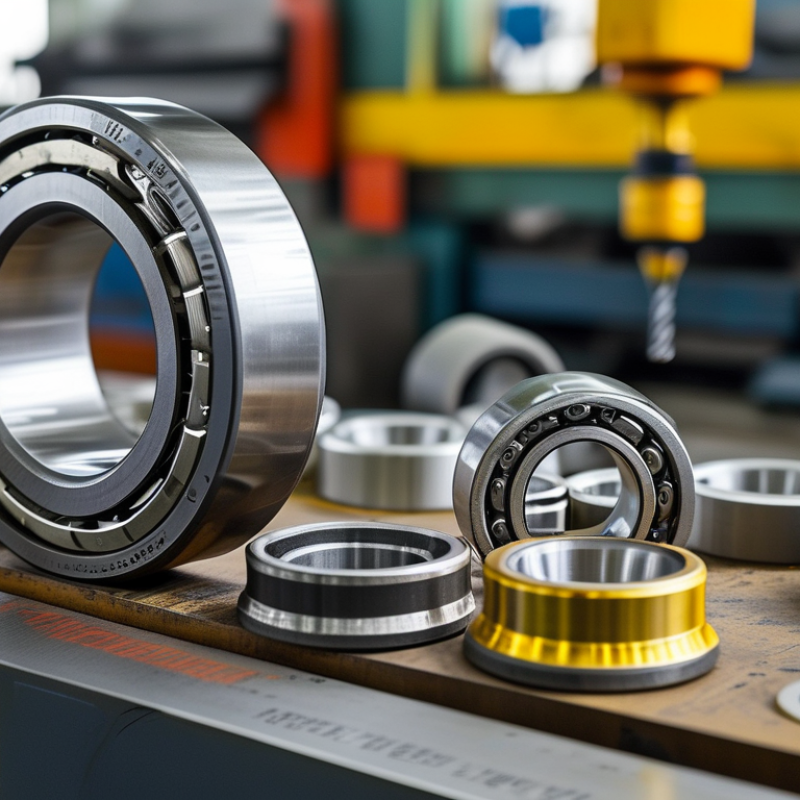
Ball and roller bearings are machine elements that support rotating shafts while reducing friction. They contain rolling elements between inner and outer rings. A cage keeps those elements evenly spaced.
Ball bearings use spherical balls and suit high-speed, moderate-load applications. They are common in motors, pumps, fans, and precision equipment. Roller bearings use cylindrical, tapered, or spherical rollers. Their larger contact area handles heavier radial loads. Tapered designs can also manage combined radial and axial forces.
Small parts. Big consequences.
A 2024 Fortune Business Insights report valued the global ball bearing market at about USD 19.46 billion in 2023. It projects growth to nearly USD 28 billion by 2032. These figures reflect rising demand for efficient rotating machinery.
Selection requires more than comparing load ratings. Engineers should check speed, temperature, lubrication, contamination, shaft fit, and expected operating life. ISO 281 provides methods for calculating bearing rating life, but real service conditions often differ. Misalignment, poor sealing, and incorrect installation can shorten life dramatically.
I have found that a technically oversized bearing may still fail early when lubrication is neglected. That is the uncomfortable part.
A bearing is not an isolated component. Housing accuracy, shaft finish, installation force, and maintenance discipline all influence performance. Suppliers should therefore provide traceable test data, dimensional controls, material information, and clear operating limits.
Cost matters, but predictable service matters more.
Choosing China’s top ten ball and roller bearing suppliers requires more than comparing export volume or website claims. A credible selection starts with verified manufacturing capacity, product consistency, and technical support. Reviewers should examine factory records, machining equipment, heat-treatment controls, and inspection procedures. A clean production floor matters, but measurable results matter more.
Sample bearings should undergo dimensional checks, rotation tests, noise measurement, and load testing. Test reports must identify the batch, material grade, tolerance class, and inspection date. Suppliers using recognized quality systems deserve closer attention, especially when certificates can be verified independently. Traceability is essential. It connects a finished bearing to steel, machines, operators, and inspection records. Engineers should also review failure data, warranty handling, and response times. Fast replies are useful, but accurate replies are better.
Price should not lead the ranking. Low prices may hide shorter service life or inconsistent grease filling. A practical buyer can request samples from several production batches and compare them under similar conditions. Site audits can reveal details that brochures omit, such as worn gauges or weak storage control. No ranking is perfect. Supplier performance may change after a new subcontractor, manager, or material source appears. I would leave room for reassessment. That weakness is honest. The strongest candidates combine repeatable quality, documented expertise, transparent communication, and evidence from real operating conditions. Industry references help, but independent testing remains more convincing.
| No. | Selection Dimension | Weight | Key Data to Review | Recommended Benchmark | Verification Evidence |
|---|---|---|---|---|---|
| 1 | Product Range and Engineering Coverage | 15% | Availability of deep-groove ball, angular-contact, spherical, cylindrical-roller, tapered-roller and thrust-bearing configurations. | Capability to support standard, high-speed, high-load, sealed, corrosion-resistant and application-specific bearing requirements. | Technical catalogue, dimensional drawings, load-rating data and application references. |
| 2 | Dimensional and Manufacturing Accuracy | 15% | Bore diameter, outside diameter, width, radial internal clearance, runout and geometric tolerances. | Conformance with ISO 492 dimensional and geometrical tolerance requirements for rolling bearings. | Inspection plans, capability studies, calibration records and sample inspection reports. |
| 3 | Material and Heat-Treatment Control | 12% | Bearing-steel traceability, chemical composition, hardness, retained austenite, cleanliness and heat-treatment consistency. | Documented steel-mill traceability and controlled heat-treatment parameters appropriate to the bearing application. | Material certificates, furnace records, metallurgical test results and lot-traceability records. |
| 4 | Load Rating and Service Life | 12% | Basic dynamic load rating, basic static load rating, calculated rating life and application safety margin. | Load ratings and rating-life calculations presented according to ISO 281, with application-specific validation where required. | Published load tables, calculation sheets, endurance-test reports and application test data. |
| 5 | Quality Management System | 10% | Process control, corrective action, nonconformance management, internal audits and customer complaint response. | Current ISO 9001 certification covering the relevant manufacturing and inspection activities. | Valid certificate, certification scope, audit summary and corrective-action records. |
| 6 | Testing and Inspection Capability | 10% | Dimensional inspection, vibration, noise, torque, cleanliness, temperature and life-testing capability. | In-house or qualified laboratory capability with calibrated equipment and controlled test procedures. | Equipment list, calibration certificates, test methods and inspection records. |
| 7 | Production Capacity and Delivery Reliability | 8% | Monthly capacity, standard lead time, maximum sustainable output, on-time delivery and contingency planning. | Capacity matched to forecast demand, documented lead-time commitments and measurable delivery performance. | Capacity plan, production schedule, delivery-performance records and business-continuity plan. |
| 8 | Customization and Technical Support | 6% | Ability to modify clearance, seals, cages, lubrication, materials, coatings and packaging. | Documented engineering change process, drawing approval procedure and application-support resources. | Technical questionnaire, sample drawings, development schedule and engineering response records. |
| 9 | Cost Competitiveness and Total Cost | 7% | Unit price, tooling cost, minimum order quantity, packaging, freight, warranty exposure and service life. | Evaluation based on total cost of ownership rather than purchase price alone. | Comparable quotations, landed-cost model, warranty terms and approved sample results. |
| 10 | Compliance, Sustainability and Supply Risk | 5% | Environmental controls, restricted-substance management, export documentation, supplier dependency and geopolitical or logistics risk. | Clear compliance documentation, responsible sourcing controls and a practical mitigation plan for supply interruptions. | ISO 14001 evidence where applicable, compliance declarations, risk register and alternate-source plan. |
| Total Evaluation Weight | 100% | Use weighted scoring together with sample approval, factory audit and application testing. | |||
China’s Top 10 Ball and Roller Bearing Suppliers serve automotive, agricultural, industrial, and energy equipment markets. Their product ranges commonly include deep-groove ball bearings, tapered roller bearings, spherical bearings, and custom assemblies. In practical purchasing work, I examine steel traceability, heat-treatment records, grinding accuracy, and inspection reports before comparing prices.
Reliable suppliers usually operate automated production lines and maintain laboratories for noise, vibration, hardness, and rotational testing. Look for ISO 9001 systems, clear batch numbers, and documented dimensional tolerances.
Export experience also matters. A supplier should understand packaging, moisture control, shipping documents, and destination-market requirements. Small details matter.
Ask for samples first.
A serious factory can explain its cage materials, lubricant selection, sealing design, and expected service conditions. It should also provide test data rather than broad promises.
During audits, I check calibration labels, warehouse rotation, and how rejected parts are isolated. These observations often reveal more than a polished presentation.
No supplier is perfect. Even strong manufacturers may show uneven communication between sales and engineering teams. That weakness deserves attention before a long-term order. Comparing lead times, replacement support, minimum quantities, and complaint responses helps identify the most dependable options among China’s top ten bearing suppliers.
Ball and roller bearing suppliers serve far more than automotive factories. Automotive remains a major buyer, using bearings in wheel hubs, transmissions, electric motors, and steering systems. Fortune Business Insights valued the global bearing market at about $132.1 billion in 2023. Its report expects strong growth through 2032, supported by vehicle production and industrial automation.
Aerospace manufacturers demand lightweight, low-friction parts for turbines, landing gear, and flight-control systems. Rail operators use sealed bearings inside wheelsets, where heat, vibration, and heavy loads create strict maintenance needs. Wind farms install large roller bearings in main shafts and pitch systems. Mining, steel, agriculture, construction, and material-handling equipment also depend on robust bearing designs. Robotics and medical equipment need quieter, cleaner, and more precise components. The use case changes everything. A bearing that performs well in a factory may fail quickly near saltwater or abrasive dust.
Tips: Match the bearing to load direction, speed, temperature, contamination, and maintenance access. Check fatigue ratings against real operating cycles, not only catalog figures. Ask for traceability documents and test records. ISO 281 remains a useful reference for rating life calculations, but field conditions can reduce theoretical life. I have seen specifications look excellent on paper, yet poor lubrication caused early damage. That gap deserves honest review. According to Grand View Research, automation and renewable-energy investment are expanding demand for specialized bearing systems, although forecasts can shift with construction cycles and energy prices.
China Top 10 Ball and Roller Bearing Suppliers?
Choosing a Chinese bearing supplier requires more than comparing catalog prices. Start by matching the supplier’s experience with your application, including load, speed, temperature, and operating environment. Ask for material specifications, heat-treatment records, dimensional tolerances, and grease details. A serious factory should explain these points clearly.
Request samples from the same production line used for bulk orders. Check surface finish, noise, rotation smoothness, packaging, and measured clearance. Review quality certificates, inspection procedures, traceability records, and corrective-action reports. An on-site audit or independent inspection can reveal practical details that a polished website hides. It is not perfect, but it reduces uncertainty.
Communication matters every week. Test how quickly the supplier answers technical questions and handles an unclear drawing. Confirm minimum order quantities, tooling charges, production capacity, delivery terms, and replacement procedures in writing. Do not select only by the lowest quotation. A cheaper bearing may create higher maintenance costs later. I have seen purchasing teams focus heavily on price and overlook inconsistent packaging or incomplete inspection data. That choice often needs reconsideration. Ask for references from similar industries, but verify them independently. A reliable supplier welcomes measurable requirements, transparent records, and small trial orders before a larger commitment.
This transparent evaluation framework uses practical procurement criteria for comparing Chinese bearing suppliers. Quality systems, product consistency, technical capability, traceability, delivery performance, and after-sales support should be verified through certificates, inspection records, samples, audits, and customer references. The percentages are suggested evaluation weights, not market-share data or rankings of individual companies.
Common products include deep-groove ball bearings, tapered roller bearings, and spherical bearings. Custom assemblies are also available.
Ask for material specifications, heat-treatment records, dimensional tolerances, and lubricant details. Batch numbers should remain traceable.
Samples reveal surface finish, rotation smoothness, noise, clearance, and packaging quality. Ask for samples from the bulk-production line.
It should explain cage materials, sealing design, lubricant selection, and expected service conditions. Clear answers matter.
Review inspection procedures, calibration labels, laboratory testing, and corrective-action reports. Check hardness, vibration, noise, and rotational testing records.
Not always. A cheaper bearing may bring higher maintenance costs, inconsistent packaging, or incomplete inspection data.
Confirm minimum quantities, lead times, tooling charges, production capacity, delivery terms, and replacement procedures in writing. Small details matter.
Communication matters every week. Test responses to technical questions and unclear drawings. Sales and engineering teams may not always communicate evenly.
Yes, but it cannot remove every risk. Check warehouse rotation, rejected-part isolation, calibration labels, and actual production conditions.
Use a small trial order, independent inspection, and verified industry references. Review the results carefully before increasing volume. Reconsider quickly when records remain incomplete.
This guide introduces the basic structure and working principles of ball bearings and roller bearings, explaining how each type supports rotating equipment, reduces friction, and handles different load conditions. It also outlines how China’s top 10 Ball And Roller Bearing suppliers can be evaluated through product quality, manufacturing capability, material control, testing standards, production consistency, customization options, delivery performance, and customer service. The selection approach focuses on practical business value rather than brand recognition alone.
The article also reviews the major industries that use bearings, including automotive manufacturing, industrial machinery, renewable energy equipment, construction systems, agriculture, transportation, and automation. To choose a suitable Chinese supplier, buyers should compare technical specifications, load capacity, operating speed, precision grades, sealing options, certification documents, quality-control procedures, pricing, minimum order requirements, lead times, and after-sales support. A careful comparison can help businesses identify a reliable supplier whose products match their application, budget, and long-term maintenance needs.
