
Sill Bearing
Choosing the right Thin Section Bearings is crucial for optimal machinery performance. These specialized bearings offer reduced weight and compact design. According to a recent industry report by Grand View Research, the global demand for Thin Section Bearings is expected to reach $1.4 billion by 2026. This growth highlights their significance in various applications, from aerospace to medical devices.
Expert insights also shed light on this topic. Dr. Emily Tran, a leading figure in bearing technology, states, "Selecting the correct thin section bearing can prevent costly downtime and enhance machinery efficiency." Her perspective underscores the importance of precise selection based on application needs.
As industries evolve, the complexity of requirements grows. Users must consider load capacity, environmental conditions, and space constraints when making decisions. Understanding these factors is essential for effective application. With so many variables involved, finding the ideal Thin Section Bearings can be a challenge. However, a well-informed choice can lead to significant gains in reliability and performance.
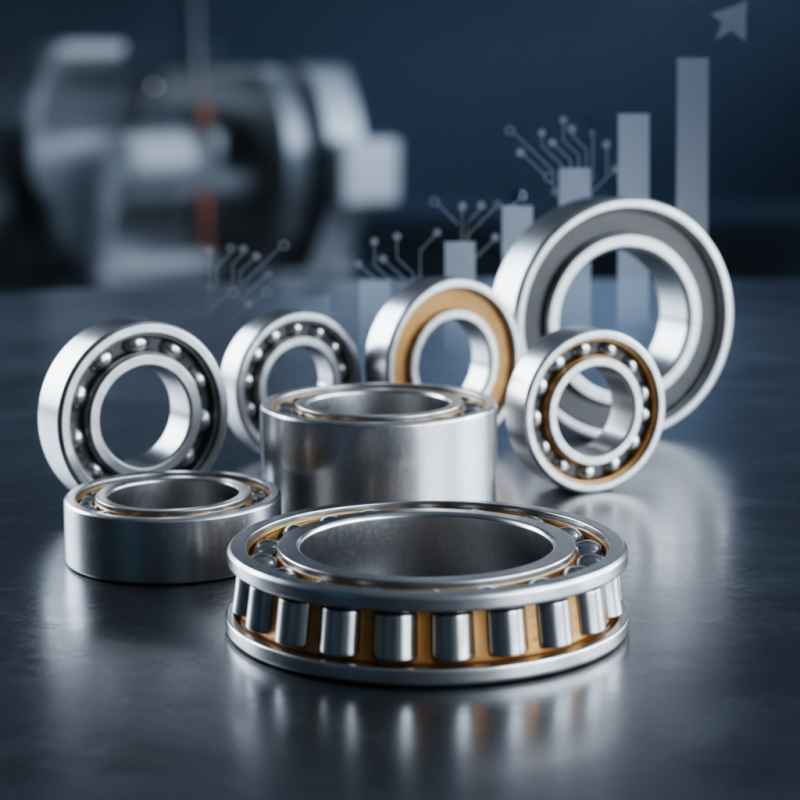
Thin section bearings are a vital component in various applications. They offer a unique design that reduces space while maintaining performance. Often used in robotics, aerospace, and medical devices, these bearings allow for precise movement in constrained spaces. Their thin profile helps reduce weight and enhance efficiency, making them ideal for modern engineering needs.
Understanding the construction of thin section bearings is crucial. They come in different designs, such as angular contact and radial types. Each design serves specific functions. For example, angular contact bearings handle axial loads, while radial bearings excel in load distribution. Choosing the correct type requires knowledge of the application’s requirements. Factors like load capacity, speed, and environmental conditions must be considered.
Despite their advantages, thin section bearings come with challenges. They can be sensitive to misalignment and may require precise installation. Users should assess their needs carefully before selection. Ignoring these details can lead to performance issues. An informed decision-making process can significantly enhance component reliability and longevity.
Choosing the right thin section bearings involves several key factors. Load capacity is crucial. These bearings often bear radial, axial, or combination loads. According to industry reports, the load capacity can vary significantly based on design and materials. For example, ceramic bearings may provide a higher strength-to-weight ratio than steel alternatives. This affects both performance and longevity in applications.
Another consideration is the dimensional accuracy. Precision is vital for applications in aerospace and medical devices. The tolerances required can be tight. An article from the Journal of Mechanical Engineering indicates that a dimensional tolerance of ±0.001 inches can dramatically impact functioning, especially in systems with high rotational speeds. The need for precision often means searching beyond standard options.
Environmental conditions also demand attention. Bearings must withstand varying temperatures, humidity, and contaminants. Many thin section bearings are designed to operate in extreme circumstances. Reports show that lubricants used can degrade over time, affecting performance. Regular inspections and proper maintenance protocols are necessary to ensure reliability. These factors highlight the ongoing evaluation required in selecting appropriate thin section bearings for specific needs.
When selecting thin section bearings, material choice is crucial. Various materials influence performance, durability, and application suitability. Common materials include stainless steel, ceramic, and plastic. Each offers distinct characteristics. For instance, stainless steel is strong and corrosion-resistant, making it ideal for harsh environments. Ceramics, on the other hand, provide lightweight options with high wear resistance but can be brittle.
The impact of material extends beyond strength. Thermal conductivity and friction level are also affected by these choices. Stainless steel tends to have higher friction, which may require lubrication. In contrast, ceramics often exhibit lower friction but can be costly. User requirements should drive these decisions. For lower loads, plastics may suffice but come with limitations in heat tolerance.
Reflecting on these points, one must consider not only initial costs but long-term performance. Choosing the wrong material could lead to premature failure. This could hinder productivity and incur extra costs over time. Test and evaluate different materials under varying conditions to ascertain suitability. This process may reveal unexpected results and guide informed choices.
Choosing the right thin section bearings involves understanding their load capacities and performance ratings. The load capacity defines how much weight the bearing can hold while maintaining optimal function. This capacity is crucial when selecting bearings for precision applications, like robotics or aerospace. These applications often face varying loads and dynamic forces. Evaluating the load capacity under these conditions ensures reliability.
Performance ratings are equally important. They reflect how well a bearing can withstand speed and temperature variations. A bearing with a high-performance rating will operate efficiently under challenging conditions. This can be particularly useful in high-speed machinery. However, not all high-rated bearings are suitable for every application. It's essential to balance load capacity with performance to prevent premature failure.
When assessing options, consider the specific requirements of your application. Sometimes, a bearing with lower performance may be a better fit for lighter loads. Alternatively, higher capacity might be necessary in demanding environments. Balancing these factors requires careful consideration and, often, a bit of trial and error. This process can be complex, but the right choice leads to improved efficiency and longevity.
Thin section bearings play a crucial role in various industries. They are particularly valued for their lightweight design and compact dimensions. Many sectors utilize these bearings due to their unique properties. For instance, the aerospace industry relies on thin section bearings for both aircraft and spacecraft. The need for high precision and low weight makes these bearings essential in high-tech applications.
Medical devices also benefit significantly from thin section bearings. Equipment such as MRI machines requires durable components to maintain accuracy. These bearings can reduce friction, ensuring smoother operation. In robotics, they are vital for joint movements. Robots need precise control, and thin section bearings provide that with their low profile and high stiffness.
However, choosing the right bearing is not straightforward. Users often overlook details like load capacities and environmental conditions. In some cases, a mismatched bearing can lead to operational failures. It is crucial to evaluate specific needs and applications before making a decision. Exploring these factors ensures optimal performance and longevity in various applications.
: Load capacity is crucial. It determines how much weight the bearing can support effectively.
Precision is vital, especially in aerospace and medical applications, where tight tolerances greatly impact performance.
Bearings must withstand temperature changes, humidity, and contaminants, which can degrade lubricants and performance.
They indicate how well a bearing can handle speed and temperature fluctuations in demanding applications.
Yes, sometimes a lower-rated bearing is better for lighter loads, depending on specific application needs.
Regular inspections are necessary to ensure reliability and catch performance issues early on.
No, it often requires careful consideration and trial and error, which can be complex.
This can lead to premature failure of the bearing, impacting overall system performance.
No, matching load capacity with performance is essential, as not all bearings fit every need.
Overlooking specific application requirements can lead to suboptimal choices and reduced efficiency.
Thin section bearings are specialized bearings designed to accommodate unique space constraints while providing reliable performance in various applications. Understanding their definition and appropriate uses is crucial for effective application in fields such as robotics, aerospace, and medical equipment. When selecting thin section bearings, key factors include load capacity, material choices, and performance ratings, each of which significantly affects the bearing's functionality and durability.
Material selection is another critical aspect, as it directly impacts the bearings' resistance to wear and environmental conditions. Evaluating load capacities and performance ratings is essential to ensure the bearings can handle the specific requirements of each application. By considering these factors, engineers can successfully determine the most suitable thin section bearings for their needs, enhancing the efficiency and reliability of their machinery and projects.
