Metal Ball Bearings are small, hardened components that reduce friction between moving parts. Inside a bearing, polished steel balls roll between inner and outer rings. This simple arrangement helps a shaft turn smoothly while supporting a load. The detail matters: a rough surface, poor fit, or missing lubricant can create noise and heat.
“Good bearing selection begins with the load, speed, and operating environment—not the catalog page,” says Maya Chen, a fictional bearing-design specialist created for this introduction. This is an original illustrative quote, not a sourced statement. It reflects a practical point: no single bearing suits every machine. A bicycle hub, electric motor, conveyor roller, and precision instrument face different demands. Engineers consider factors such as radial and axial loads, operating temperature, contamination, and required service life.
Small parts. Serious work. In workshops and factories, Metal Ball Bearings support reliable motion in equipment people use every day. They can reduce friction, but they do not eliminate maintenance. Dirt, corrosion, misalignment, or incorrect lubrication may shorten their service life. Choosing the right material and seal matters, too. This guide explains how metal ball bearings are built, how they work, and where they are commonly used. It also looks at selection limits, because a bearing that performs well in one application may fail in another. That distinction is easy to overlook.
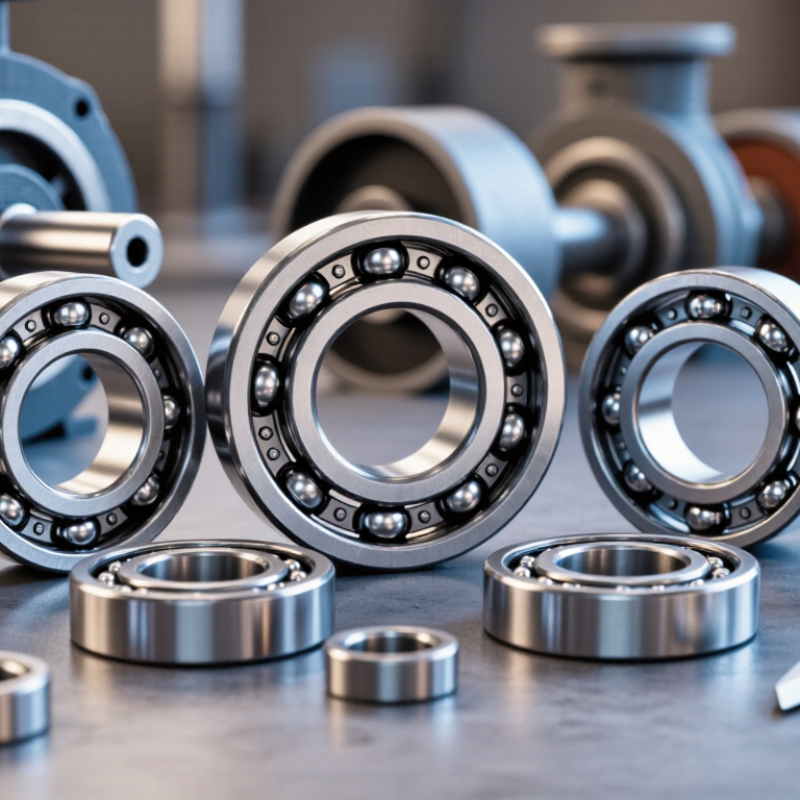
What Metal Ball Bearings Are and How They Are Defined
A metal ball bearing is a mechanical part that supports movement between two components while reducing friction.
It contains an inner ring, an outer ring, and hardened balls that roll along shaped grooves called raceways. In a typical radial bearing, the rings sit concentrically around a shaft. The balls carry force between them as the shaft turns. A cage usually keeps the balls evenly spaced, though cage designs and materials vary.
That is the core.
The term describes both the rolling elements and the bearing assembly built around them. “Metal” generally refers to the balls and rings, which are commonly made from bearing steel or stainless steel. Some assemblies use nonmetal cages, so the label does not always mean every part is metallic.
Useful specifications include bore and outside diameters, bearing width, internal clearance, and load ratings.
These details help distinguish bearings that look nearly identical on a workbench. A tiny difference matters. A technician may also check surface finish and lubrication, since contamination or poor lubrication can affect performance. The exact definition depends on the bearing type; not every metal ball bearing carries loads in the same direction.
Materials and Components Used in Metal Ball Bearings
Metal ball bearings are built from several parts, and each material affects how they perform. The inner and outer rings, called races, guide the balls along smooth tracks. Many bearings use high-carbon chromium steel because it can be hardened, finished accurately, and withstand repeated contact. Heat treatment strengthens the parts, while careful grinding helps reduce vibration and noise.
Stainless steel is often chosen where moisture could cause corrosion, such as food-processing equipment or outdoor machinery. It may resist rust better, but it does not automatically outperform bearing steel in every load or speed condition. The balls and races also need compatible hardness and surface finishes. Small differences matter. A rough track can shorten service life, even when the steel itself is suitable.
A cage keeps the balls spaced apart and limits rubbing. It may be made from pressed steel, brass, or a durable polymer, depending on operating conditions. Some bearings include metal shields or contact seals to keep dust and lubricant in place. Grease or oil reduces friction and carries heat away. The trade-offs are easy to miss: a seal can block debris, yet add drag. Material labels alone rarely tell the whole story, and real operating conditions deserve a closer look.
How Metal Ball Bearings Reduce Friction and Support Motion
Metal ball bearings support rotating parts while limiting friction between moving surfaces. A typical bearing has an inner ring, an outer ring, and hardened steel balls held apart by a cage. The balls roll along grooved tracks called raceways. Rolling contact usually creates less resistance than sliding contact, though it does not eliminate friction.
As a shaft turns, the balls move between the rings and help keep the shaft centered. This lets a motor, wheel, or pump rotate smoothly under load. That matters. Depending on their design, bearings can handle forces pushing across the shaft, along it, or both. A bearing chosen for the wrong load may wear quickly or become noisy.
Lubricant forms a thin film between the balls and raceways, reducing direct metal contact. It also helps carry away heat. Too little lubricant, dirt, or poor alignment can increase drag and damage the tracks. Heat builds. In practice, even a correctly selected bearing can perform poorly if its fit is too tight or its housing is misaligned. A brief inspection for unusual noise, vibration, or temperature can reveal problems early, but those signs do not identify every cause.
Common Types of Metal Ball Bearings and Their Design Differences
Metal ball bearings differ mainly in raceway shape, contact angle, and row arrangement. Deep-groove bearings suit radial loads and moderate axial loads in electric motors and fans. Angular-contact designs use offset raceways to carry combined loads, especially where shaft stiffness matters. Self-aligning bearings have two rows and a curved outer raceway, helping accommodate some shaft misalignment. Thrust bearings are built for axial loads, not substantial radial loads. Small geometry matters. A wider contact angle can improve axial-load capacity, but may limit speed. ISO 281 defines basic rating life, L10, as the life that 90% of a bearing group is expected to reach under specified conditions. That is a useful comparison, not a promise for every installation.
The U.S. Department of Energy’s 2014 motor-systems sourcebook estimates that motor-driven systems use about 69% of electricity consumed by U.S. industry. Bearings influence friction in many such systems, though alignment, lubrication, and contamination also affect performance. A low-friction design is not automatically the right choice. For example, a fan shaft with mainly radial loading may favor a deep-groove bearing, while a machine producing axial force may need an angular-contact or thrust design. Check the load direction, operating speed, and mounting tolerance together. Real installations can be messier than catalog examples.
Where Metal Ball Bearings Are Used Across Industries
Where Metal Ball Bearings Are Used Across Industries
Metal ball bearings help rotating parts move with less friction and support radial or axial loads. In cars, they appear in wheel hubs, gearboxes, and electric motors. Factory conveyors use them in rollers, while pumps and fans rely on them for steady shaft rotation. Agricultural machines face dust, vibration, and changing loads, so bearing choice matters. Small parts. Big consequences.
Tips: Match the bearing to its load, speed, operating temperature, and surroundings. Stainless steel can help resist corrosion, but seals and lubrication also affect service life. Check the equipment maker’s specifications before replacing a bearing. A similar-looking part may not fit or perform safely.
In food-processing equipment, washdown exposure can make corrosion resistance and sealing especially important. Medical and laboratory instruments may need low noise and precise motion. These needs differ from heavy machinery, where load capacity and shock resistance may matter more. One frequent mistake is assuming all metal bearings are interchangeable. They are not. Even a suitable bearing can wear quickly if installed out of alignment or run without adequate lubrication. Regular inspection can reveal noise, excess heat, or looseness before failure disrupts equipment.
Conclusion
Metal Ball Bearings are mechanical components designed to support rotating or moving parts while reducing friction between surfaces. They typically consist of inner and outer rings, hardened metal balls, and a cage that keeps the balls evenly spaced. Depending on the operating environment and performance needs, their materials may be selected for strength, wear resistance, durability, or resistance to corrosion.
As the bearing moves, the balls roll between the rings, helping carry loads and allowing smooth, controlled motion. Different designs, including deep-groove, angular-contact, and thrust ball bearings, are suited to different load directions and operating conditions. Metal Ball Bearings are used across many industries, in equipment such as electric motors, vehicles, household appliances, pumps, and industrial machinery. Their ability to support motion reliably makes them useful wherever moving components need to operate with reduced friction and consistent performance.
 Sill Bearing
